
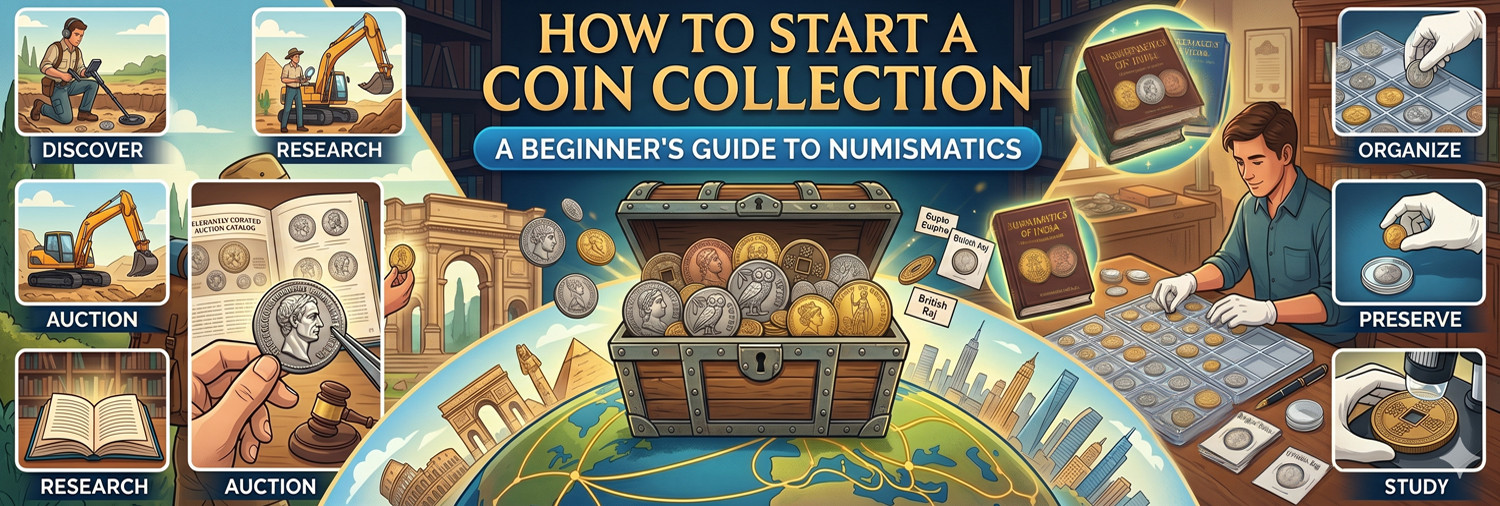
How to Start a Coin Collection: A Beginner’s Guide to Numismatics
How to Start a Coin Collection: A Beginner’s Guide to Numismatics
Coin collecting, also known as numismatics, is one of the world’s oldest and most rewarding hobbies. Whether you are interested in historical coins, commemorative issues, rare errors, or precious metal currency, starting a coin collection can be both educational and enjoyable.
For beginners, the world of numismatics may seem overwhelming at first. However, with the right approach, anyone can build a meaningful and valuable collection over time.
Decide What Type of Coins You Want to Collect
The first step is choosing your area of interest. Some collectors focus on:
Ancient coins
World coins
Indian rupees and paise
British India coinage
Error coins
Silver or gold coins
Commemorative coins
Currency notes and related collectibles
Selecting a theme helps create a more organized and enjoyable collection.
Learn the Basics of Coin Grading
Condition plays a major role in a coin’s value. Professional grading systems help determine how well-preserved a coin is.
Common grading factors include:
Surface wear
Sharpness of design
Luster
Scratches or damage
Original mint condition
Understanding basic grading terminology such as Fine (F), Very Fine (VF), Extremely Fine (XF), and Mint State (MS) is important for every collector.
Buy from Trusted Sources
One of the biggest mistakes beginners make is purchasing coins from unreliable sellers. Always buy from:
Reputable coin dealers
Verified auction platforms
Established numismatic websites
Collector communities and exhibitions
Authenticity is extremely important, especially when dealing with rare or high-value coins.
Store Coins Properly
Proper storage protects coins from environmental damage and preserves their value.
Collectors should avoid:
Touching coins with bare hands
Cleaning old coins aggressively
Storing coins in humid environments
Using coin capsules, albums, and acid-free holders can significantly improve long-term preservation.
Research Before Purchasing
Successful collectors spend time studying coins before buying them. Research helps identify:
Market value
Rarity
Historical importance
Counterfeit risks
Demand trends
Books, online catalogs, auction archives, and numismatic forums are excellent learning resources.
Start Small and Build Gradually
A great collection does not need to begin with expensive coins. Many experienced numismatists started with affordable circulation coins or commemorative pieces.
The goal should be consistency, learning, and enjoyment rather than immediate profit.
Join the Numismatic Community
Coin collecting becomes even more rewarding when connected with fellow enthusiasts. Joining clubs, attending exhibitions, and participating in online forums allows collectors to:
Exchange knowledge
Discover rare items
Learn authentication techniques
Stay updated on market trends
Networking within the community can greatly improve your collecting experience.
Focus on Passion, Not Just Investment
While rare coins can appreciate in value over time, numismatics should primarily be driven by genuine interest and curiosity.
Collectors who focus on history, artistry, and preservation often enjoy the hobby more deeply than those chasing quick profits.
Final Thoughts
Starting a coin collection is an exciting journey that combines history, research, and personal passion. With patience, proper knowledge, and careful buying decisions, even beginners can build collections that are meaningful and valuable.
Numismatics is not just about collecting coins—it is about preserving stories, cultures, and historical legacies through small pieces of metal that have survived generations.